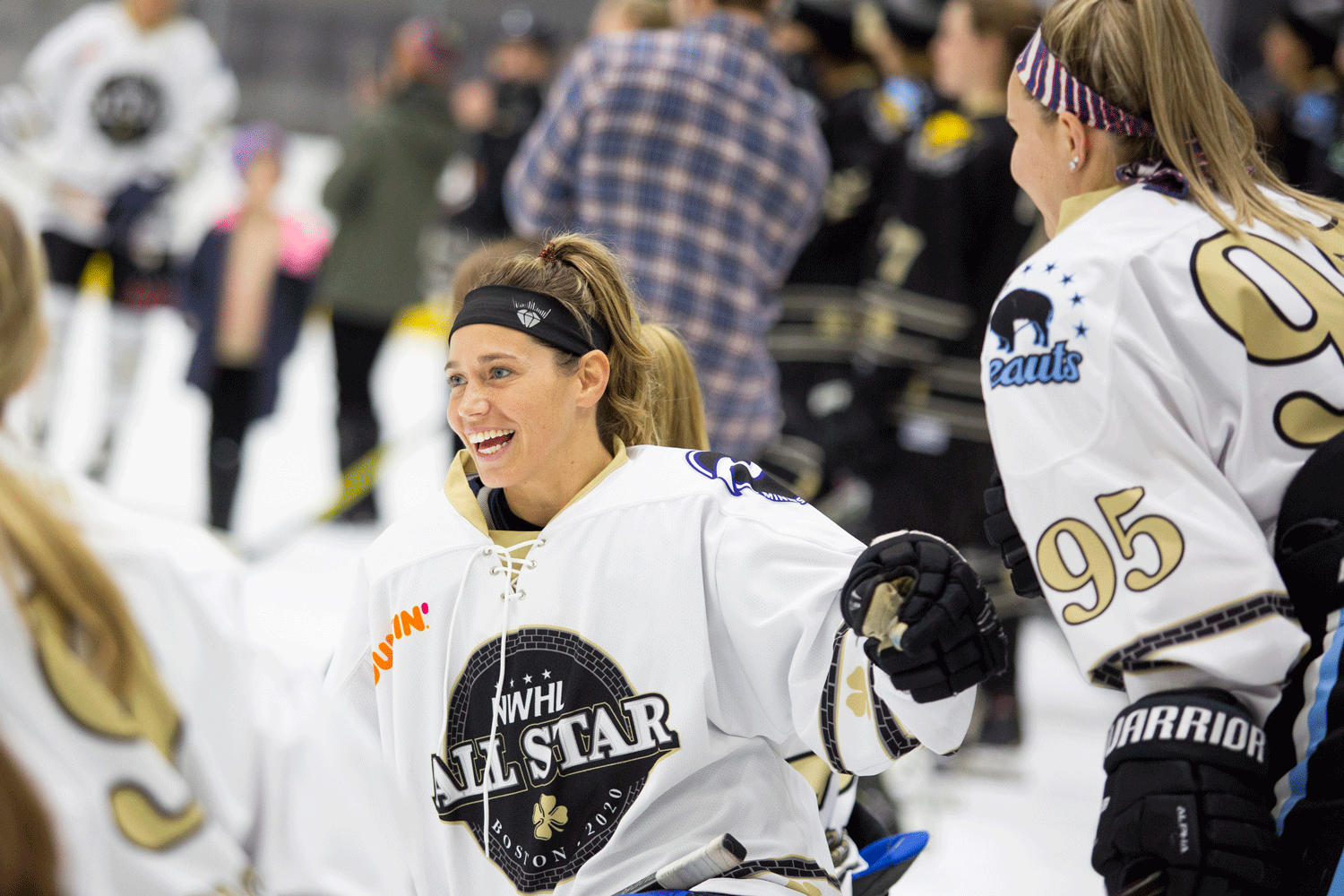
Etiqueta: Allie Thunstrom

  • Q&A with Allie Thunstrom

    Q&A with Allie Thunstrom

    Since 2019, NHeLas has also been producing content on women’s hockey. The sport is changing and, to follow this process, we must know the characters behind it.

    That is why on this day we are very excited to announce a very special partnership the site has recently forged with the NWHL. (Yes, you’re reading this right!)

    Supported by representatives of the National Women’s Hockey League, we will interview players about their experiences with the sport and what it means to be a woman in hockey.

    These interviews will be part of Women’s Hockey Column on our website, a project that has been going on for months and built through articles already available on the website (in Portuguese), in order to bring you the best content on the sport, news about the NWHL, the importance of women’s hockey and more!

    In this article, the inaugurating piece of our partnership with the NWHL, we interviewed the forward Allie Thunstrom of the Minnesota Whitecaps.

    She is co-MVP of the 2019-20 season, Isobel Cup winner and Four Nations Cup medalist with the American national team. 

    Who is Allie Thunstrom?

    Allie Thunstrom’s career was marked by multi-sportsmanship. Born in Maplewood, Minnesota, USA, Allie began her career in hockey when she was still in high school at North St. Paul High.

    Back then she collected records scoring 228 goals, 122 assists and 350 points. Those numbers resulted in the achievement of the Minnesota Ms. Hockey Award in 2006. Thunstrom also won awards in soccer and softball during her high school years.

    However, the records don’t stop there.

    While at Boston College, Allie had not only a hockey scholarship, but she also competed in softball. In four college seasons, from 2006-07, she took part in 141 games, scoring 86 goals, 53 assists and 139 points, with a 22 goals effort in her last season. Allie also won the Hockey East All Star three times.

    In 2010, the player took part in the Four Nations Cup, conquering a silver medal as part of the US National Team. In the same year Thunstrom signed her first contract with the Whitecaps, her team to this day.

    However, the Minnesota team remained an independent one for many years, joining the NWHL only in 2018. In its first season the Whitecaps debuted with a bang, winning their first Isobel Cup.

    In 2012, Allie decided to try out for a new sport. Hence, the athlete took to training speed skating, even taking part in several competitions. During that period she had to adapt to a new way of sliding through the ice.

    Her return to competitive hockey with the US National Team was during the 2015 Four Nations Cup, where she won gold. 

    Recently the player renewed her contract for her third season with the Whitecaps. She currently divides her time between the ice and her career as a field product specialist at the company Ergodyne.

    For many years you have also had a career as a speedskater. How did you get into the sport?

    In a unique, roundabout way! I still had a year of eligibility left for college softball at Boston College when I made the U.S. National Team in hockey for the first time. As a result, I ended up having to leave school to train full-time for hockey. Then I ended up getting cut from the National Team in January or February and I was kind of lost. I didn’t have hockey anymore and I was missing softball. Keep in mind, this was still a few years before the start of the NWHL.

    So I was trying to figure out what to do and my mom suggested trying speedskating. So we found a “Try Speedskating” clinic nearby and I went on a random Tuesday night. From there, the gentleman who taught the club encouraged me to try it for real. So I ended up joining a club in Minnesota and the rest is kind of history. It was a long road to being able to compete. It’s a very different stride and very different technique. So as much as I hoped it would be an easy transition, it was far from it.

    How does speedskating compare to hockey?

    It’s incredibly different. Probably the biggest and most obvious difference is the team vs individual part. In hockey, you are part of a puzzle, trying to put all the right pieces together to win games. In speedskating, it’s just you. There are no other pieces you have to think about or interface with. In hockey, you play for your teammates and the greater good of the team, but in speedskating your results don’t really affect anyone else other than you.  Other than that, the technique and skill is very different. In hockey, quick bursts and agility are equally, if not more important, than maximum speed. In speedskating it’s all about stride efficiency and max speed. It doesn’t matter how quick you are off the line if you don’t skate an efficient, and fast, lap. Some of the fastest speedskaters move their legs the slowest – but the amount of power generated in each stroke is intense.  

    Do you still practice speed skating even after joining the Whitecaps?

    Not very often. Every now and then if I have some free time I might hit the ice with my former speedskating coaches and teammates but I’m certainly not training for it. It utilizes different muscles, so jumping back and forth isn’t as seamless as it would appear. I have a pretty intense schedule as it is and I want to make sure I am at my best for our games so I try not to do anything that would interfere with my ability to play. 

    You recently won the 2020 NWHL Foundation Award. What is it like to be part of this hockey program and to visit schools? How do you feel being a role model for young athletes that want to pursue a career in the sport?

    This is probably one of my favorite parts of playing professional hockey for the Whitecaps. Being able to connect with young kids and be a role model is a really amazing experience and something I don’t take lightly. I want to show kids that it’s important to have dreams and show them how to work towards them. It’s so important to also understand that your dreams can change along the way, and sometimes you end up somewhere you never thought possible – and that’s okay too. I haven’t had the smoothest ride to get to where I am today and I wouldn’t change that for the world. If my experiences can help someone else see the world differently and encourage them to keep trying, then it’s worth every second. 

    It’s also incredibly important because when I was younger, my dreams were not “reality” because there was no professional women’s hockey. There was minimal college hockey, and no Olympic hockey until 1998 (when I was 10). Plenty of people told me to set my sights on something more realistic – something that was within reach. While I understand why, I want to do the opposite and encourage every young girl and boy to fight for their dreams and never give up. Just because you can’t see it right now, doesn’t mean it won’t be there in the future. And even if you end up on a different path in the future, the journey will have been worth every step.

    You’ve been to the NWHL All-Star Weekend in both of your seasons in the league. Can you tell us about being part of these events and recently winning the Fastest Skater competition during the All-Star Skills Challenge?

    Being selected as an All-Star has been an absolute honor and a very humbling experience. To be able to play with and against the best in the league is definitely an incredible experience. You gain so much respect for these players – like Jillian Dempsey, McKenna Brand, Kaleigh Fratkin, Madson Packer, Taylor Accursi, Marie-Jo Pelletier, Shannon Doyle, Rebecca Morse, Kate Leary, Kiira Dosdall-Arena, and the list goes on. After you battle against them so much, it’s really fun to get to play with them and get to know them off the ice. We’re all super competitive but All-Star Weekend is always so much more than just the game and skills competition. It brings out the best in everyone and it’s a really great time.


    With the Isobel Cup Final cancelled, you and the Whitecaps remain the reigning champions of the NWHL. Could you describe what it was like winning in your first season in the league and being nominated this season’s MVP?

    It’s been an absolute whirlwind couple of years playing on the Whitecaps in the NWHL. I have been part of the Whitecaps since I graduated in 2010 when we were part of the WWHL. That league folded and we were not invited to join the CWHL. So for the better part of a decade, we were playing exhibition games against college teams and a few CWHL or NWHL opponents. Then we finally got to be part of the league last season, which was so much more than I ever expected and was so special just because of the road we had taken to get there. Then to win the Isobel Cup at the end, it was really a storybook ending.

    The immense joy and support that we got from the entire State of Minnesota and our fans was what really propelled our success in year one. We obviously had a tremendously talented roster but the journey to get to the NWHL and finally getting to be part of a professional league was just so special. It’s hard to describe what it felt like getting to play and it took a little bit of pressure off because we were so genuinely excited to have the opportunity that anything beyond that was just icing on the cake. I remember walking onto the ice for our very first home game and it was sold out and LOUD. I got a little teary-eyed. And then it continued the whole season…just incredible.

    This season was a little different. We weren’t the new kids on the block anymore and we knew we had a reputation to uphold. There were expectations, and we weren’t just happy to be there anymore. We definitely took some bumps along the way in finding our stride. We started out the year with a 9-2 win, just to follow it up a day later with an overtime loss. That trend continued into December, but then we banded together and figured out the team we wanted and knew we could be. And from there it was fun. Really, really fun. We found our game and we played it pretty well. To be named a Co-MVP is really a testament to our entire team finding that stride. We were clicking and good things were happening. It was a culmination of all the pieces coming together.

    My linemates, Jonna Curtis and Meaghan Pezon deserved that accolade just as much as I did. And of course our defense and Amanda Leveille. We don’t win games without their stellar play. While considered an individual honor, it really is a team award and one I happily share with every player on our roster.

    How do you find balance between being a professional hockey player and your life off the ice?

    I love being busy and on the go, so for me, it has never been too much of an issue. I do have a job that requires a bit of travel, but I am usually able to schedule my trips around team obligations. I am also able to lean on my speedskating background to stay on top of workouts when I am on my own.

    I also am incredibly fortunate to have an employer that not only supports me, but encourages me to pursue my athletic dreams and goals. My colleagues come to games and follow our season. I work as a field product specialist for a manufacturer of safety and industrial PPE, Ergodyne. So I spend a lot of my time on jobsites and with customers helping them mitigate their safety hazards and risks. I definitely love what I do, so it’s really awesome to be able to pursue both of my passions and have support on both sides.

    We are aware that the women’s hockey world is not easy. How do you see the sport’s growth currently?

    There is a lot of great growth and exposure right now. The biggest thing for women’s hockey and women’s sports in general is the visibility and right now, there are a lot of eyes on our sport. That is a good thing. The number of people that know about our game and the NWHL is growing significantly. This season we were able to sell out games in Boston and Minnesota, and there was a huge crowd at a unique outdoor game in Buffalo. On Twitch we surpassed 8 million views. That was huge, exceeding our expectations. It’s been an exciting year to see how the Twitch channel has really opened up access to the league and the number of new fans we have.  The NWHL Open Ice weekly talk show on Twitch was also a big hit.

    Our sponsorships over the last year were the most in league history by far, and players benefit from a 50-50 split of revenue from league partnerships. The Boston Pride and the Toronto Six were acquired by individual owners, and I know more teams will be sold in the future. That’s massive for our league and for women’s hockey. It’s just been really fun to be part of it.

    Allie Thunstrom playing against the Boston Pride (Photo: Michelle Jay/NWHL)

    These are very unusual times for all of us. How was your routine affected particularly in training and conditioning, and how have you been dealing with it?

    For everyone, this pandemic has been difficult emotionally and physically. I could never compare it to the tragedies and what many others have gone through. Since you’re asking about my personal routine, I’ll talk about that.

    In a matter of days, like everyone else, I went from having a pretty standard day of going to work, hitting the gym or getting on the ice to not being able to really leave the house. It’s been difficult to maintain the same level of fitness since there is no access to ice and my gym ‘equipment’ is very limited. All I have is one set of 45-pound dumbbells! But I have been doing the best I can with what I’ve got. I run, inline skate, and bike as much as I can. I have definitely decided that I need to have a home gym in the future!

    I definitely miss being on the ice competing with my teammates, but I also understand the health crisis and want to continue to do my part to protect my neighbors, loved ones, friends, and everyone around me. So while it is definitely a bit lonelier than I am used to, I’m thankful for virtual platforms that allow us to stay connected and keep in touch. It won’t be like this forever, so we have to make the most of it and take care of each other.

    Photo: Michele Jay/NWHL

  • Q&A com Allie Thunstrom: uma carreira de pluri-esportividade

    Q&A com Allie Thunstrom: uma carreira de pluri-esportividade

    Desde o ano passado, o NHeLas tem se preocupado em trazer conteúdo também sobre o hockey feminino. O esporte está mudando e, para acompanharmos essa mudança, é fundamental conhecermos os personagens por trás dela.

    Por isso, oficializamos hoje uma parceria muito especial que o site conquistou no último mês com a National Women’s Hockey League. (Isso mesmo, a NWHL).

    Com o apoio de representantes da liga profissional de hockey feminino, vamos entrevistar jogadoras sobre suas experiências com o esporte e o que é ser mulher no hockey.

    Estas entrevistas serão parte da Coluna de Hockey Feminino em nosso site, um projeto que vem sendo trabalhado há meses, construído através de outros textos já disponíveis no site, para trazer para vocês o melhor conteúdo sobre a modalidade, notícias sobre a NWHL, importância do hockey feminino e muito mais!

    Nesse texto, o primeiro em parceria com a NWHL, entrevistamos a atacante Allie Thunstrom do Minnesota Whitecaps.

    A jogadora é co-MVP da temporada 2019-20, vencedora da Isobel Cup e medalhista da Four Nations Cup com a seleção americana. 

    Quem é Allie Thunstrom? 

    A carreira de Allie Thunstrom foi marcada por uma pluri-esportividade. Nascida em Maplewood, no estado de Minnesota nos Estados Unidos, Allie iniciou sua carreira no esporte ainda no high school pelo North St. Paul High.

    Nesse período, ela acumulou recordes, marcando um total de 228 gols, 122 assistências e 350 pontos. Estes números resultaram na conquista do Minnesota Ms. Hockey Award em 2006. Thunstrom também conquistou prêmios de futebol e softbol nos anos de high school.

    No entanto, os recordes não param por aí.

    Durante seu tempo com a Boston College, Allie ganhou bolsa para jogar hockey, mas também chegou a competir no softbol. Em suas quatro temporadas universitárias, começando em 2006-07, ela participou de 141 jogos, nos quais somou 86 gols (22 somente em sua última temporada), 53 assistências e 139 pontos. Allie também conquistou o Hockey East All-Star três vezes.

    Em 2010, a jogadora participou da Four Nations Cup conquistando a medalha de prata com a seleção dos EUA. No mesmo ano, Thunstrom assinou seu primeiro contrato com os Whitecaps, time que permanece até hoje.

    Entretanto, a equipe de Minnesota permaneceu por muitos anos como um time independente, entrando para a NWHL somente em 2018. Em sua primeira temporada na liga, os Whitecaps fizeram uma grande estreia e conquistaram sua primeira Isobel Cup.

    Em 2012, Allie resolveu que era hora de tentar um novo esporte. Por isso, a atleta começou a treinar patinação de velocidade, chegando inclusive a participar de diversas competições. Nesse período, ela precisou se adaptar a uma nova forma de deslizar no gelo. 

    Retornando a competir no hockey pela seleção americana, a jogadora voltou à Four Nations Cup em 2015, desta vez conquistando a medalha de ouro.  

    Recentemente, Allie Thunstrom renovou para a sua terceira temporada com os Whitecaps. Atualmente, ela divide seu tempo entre o gelo e sua carreira como especialista em produtos de campo na Ergodyne. 

    [Esta entrevista foi traduzida e editada para maior clareza]

    Por muitos anos você se dedicou à carreira como patinadora de velocidade. Como se interessou pela modalidade?

    De uma maneira única e indireta! Eu ainda tinha um ano de elegibilidade para o softbol na Boston College quando integrei a seleção nacional dos EUA no hockey pela primeira vez. Como resultado, acabei tendo que deixar a escola para treinar em tempo integral no hockey. Logo depois acabei sendo cortada da seleção, em janeiro ou fevereiro, e fiquei meio perdida. Eu não tinha mais o hockey e sentia falta do softbol. Lembrando sempre que isso ocorreu alguns anos antes do início da NWHL.

    Então, eu estava tentando descobrir o que fazer e minha mãe sugeriu tentar patinação de velocidade. Por isso encontramos uma clínica “Try Speedskating” nas proximidades e eu fui em uma terça à noite qualquer. A partir daí, o senhor que ensinava no clube me incentivou a experimentar a modalidade de verdade. Desta forma, acabei ingressando em um clube em Minnesota e o resto é história. Foi um longo caminho para conseguir  competir. A passada é muito diferente e se trata de uma técnica muito diferente. Então, por mais que eu esperasse uma transição fácil, estava longe disso.

    Como ela se compara ao hockey?

    É incrivelmente diferente. A maior e mais óbvia diferença é provavelmente aquela entre as partes em equipe e individual. No hockey, você faz parte de um quebra-cabeça, tentando juntar todas as peças corretamente para vencer os jogos. Na patinação de velocidade, é só você. Não há outras peças com as quais você tenha que pensar ou interagir. No hockey, você joga pelos seus companheiros de equipe e pelo bem maior de todos, mas na patinação de velocidade seus resultados realmente não afetam ninguém além de você. Fora isso, a técnica e habilidade são muito diferentes. No hockey, rajadas rápidas e agilidade são igualmente, senão mais importantes, que a velocidade máxima. Na patinação de velocidade, trata-se de eficiência de passada e velocidade máxima. Não importa a rapidez com que você está fora da linha (de partida) se não patinar em uma volta eficiente e rápida. Alguns dos patinadores de velocidade mais rápidos movem as pernas mais lentamente – mas a quantidade de energia gerada em cada passada é intensa.

    Você ainda pratica patinação de velocidade mesmo após ingressar no Whitecaps?

    Não muito frequentemente. De vez em quando, se eu tenho algum tempo livre, posso entrar no gelo com meus ex-treinadores e colegas de patinação de velocidade, mas certamente não estou treinando para isso. (A modalidade) utiliza músculos diferentes, portanto, passar de um para outro não é tão fácil quanto parece. Tenho um cronograma bastante intenso e quero garantir que estou no meu melhor para os nossos jogos, por isso tento não fazer nada que interfira com a minha capacidade de jogar.

    Você ganhou o 2020 NWHL Foundation Award recentemente. Como é fazer parte deste programa de hockey e visitar escolas? Como você se sente sendo um exemplo para as jovens atletas que desejam seguir uma carreira no esporte?

    Esta é provavelmente uma das minhas partes favoritas de jogar hockey profissional no Whitecaps. Ser capaz de conectar-me com crianças pequenas e ser um exemplo é uma experiência realmente incrível e algo que não encaro de forma leviana. Quero mostrar às crianças que é importante ter sonhos e mostrar-lhes como ir em busca deles. É muito importante entender também que seus sonhos podem mudar ao longo do caminho e, às vezes, você acaba em algum lugar que nunca pensou ser possível – e está tudo bem também. Não tive o caminho mais tranquilo para chegar onde estou hoje e não mudaria isso por nada no mundo. Se minhas experiências podem ajudar alguém a ver o mundo de maneira diferente e incentivá-lo a continuar tentando, cada segundo valeu a pena. Também é extremamente importante porque, quando eu era mais jovem, meus sonhos não eram “realidade” porque não havia hockey profissional feminino. Havia o mínimo de hockey universitário e nenhum hockey olímpico até 1998 (quando eu tinha 10 anos). Muitas pessoas me disseram para focar em algo mais realista – algo que estava ao meu alcance. Enquanto entendo o porquê, quero fazer o oposto e incentivar cada menina e menino a lutarem por seus sonhos e nunca desistirem. Só porque você não pode vê-lo agora, não significa que não estará lá no futuro. E mesmo se você seguir um caminho diferente no futuro, a jornada terá valido cada passo.

    Você participou do All-Star Weekend da NWHL nas duas temporadas da liga. Pode nos contar como foi participar desses eventos e ganhar recentemente a competição de patinadora mais rápida durante o All-Star Skills Challenge?

    Ser selecionada como All-Star foi uma honra absoluta e uma experiência que me trouxe humildade. Ser capaz de jogar com e contra os melhores da liga é definitivamente uma experiência incrível. Você ganha tanto respeito por essas jogadoras – como Jillian Dempsey, McKenna Brand, Kaleigh Fratkin, Madison Packer, Taylor Accursi, Marie-Jo Pelletier, Shannon Doyle, Rebecca Morse, Kate Leary, Kiira Dosdall-Arena e a lista continua. Depois de lutar tanto contra elas, é realmente divertido brincar com elas e conhecê-las no gelo. Somos todas super competitivas, mas o All-Star Weekend é sempre muito mais do que apenas a competição de jogos e habilidades. Traz o melhor de todos e é realmente um ótimo momento.

    Com a final da Isobel Cup cancelada, você e os Whitecaps continuam os campeões da NWHL. Poderia descrever como foi vencer em sua primeira temporada na liga e ser nomeada MVP desta temporada?

    Fazem dois agitados anos que jogamos nos Whitecaps na NWHL. Faço parte dos Whitecaps desde que me formei em 2010, quando fazíamos parte da WWHL. Essa liga foi encerrada e não fomos convidados a participar da CWHL. Então, durante quase uma década, estávamos jogando jogos de exibição contra equipes de faculdade e alguns adversários da CWHL ou da NWHL. Finalmente, passamos a fazer parte da liga na última temporada, o que foi muito mais do que eu esperava e foi tão especial apenas por causa do caminho que tínhamos trilhado para chegar lá. Então vencer a Isobel Cup no fim, foi realmente um final digno de contos de fadas. 

    A imensa alegria e apoio que recebemos de todo o estado de Minnesota e de nossos fãs foi o que realmente impulsionou nosso sucesso no primeiro ano. Obviamente, tínhamos uma equipe tremendamente talentosa, mas a jornada para chegar à NWHL e finalmente fazer parte de uma liga profissional foi muito especial. É difícil descrever como foi finalmente jogar e isso tirou um pouco da pressão, porque estávamos realmente entusiasmadas por ter a oportunidade, e qualquer coisa além disso seria a cereja do bolo. Lembro-me de entrar no gelo para o nosso primeiro jogo em casa, que teve seus ingressos esgotados, e com uma torcida que fazia barulho. Eu fiquei com os olhos marejados. E então continuou daquele jeito a temporada inteira … simplesmente incrível.

    Esta (última) temporada foi um pouco diferente. Não éramos mais as novatas e sabíamos que tínhamos uma reputação a defender. Havia expectativas e não estávamos mais apenas felizes em participar. Nós definitivamente tivemos algumas dificuldades ao longo do caminho para encontrar nosso passo. Começamos o ano com uma vitória por 9 a 2, apenas para perder no overtime no dia seguinte. Essa tendência continuou em dezembro, mas então nos unimos e descobrimos o time que queríamos e sabíamos que poderíamos ser. E a partir daí foi divertido. Muito, muito divertido. Encontramos o nosso jogo e jogamos muito bem. Ser nomeada Co-MVP é realmente um testemunho de toda a nossa equipe ter encontrado esse ritmo. Estávamos clicando e coisas boas estavam acontecendo. Foi o culminar de todas as peças reunidas.

    Minhas colegas de linha, Jonna Curtis e Meaghan Pezon, mereciam essa honra tanto quanto eu. E, claro, nossa defesa e Amanda Leveille. Não ganhamos partidas sem o seu jogo estelar. Embora seja considerada uma honra individual, é realmente um prêmio de equipe e que eu fico feliz em compartilhar com todas as jogadoras de nossa lista.

    Como você encontra o equilíbrio entre ser uma jogadora de hockey profissional e sua vida fora do gelo?

    Eu amo estar ocupada e em movimento, portanto, para mim, nunca foi um problema. Tenho um trabalho que exige um pouco de viagens, mas geralmente consigo agendá-las de acordo com as obrigações da equipe. Eu também sou capaz de me apoiar no meu background de patinação de velocidade para ficar em dia com os treinos quando estou sozinha.

    Também tenho a grande sorte de ter um empregador que não apenas me apoia, como também me incentiva a seguir meus sonhos e objetivos atléticos. Meus colegas vêm aos jogos e acompanham nossa temporada. Trabalho como especialista em produtos de campo para um fabricante de EPIs industriais e de segurança, Ergodyne. Portanto, passo muito do meu tempo em locais de trabalho e com os clientes ajudando-os a reduzir os riscos e perigos de segurança. Definitivamente adoro o que faço, por isso é realmente incrível poder ir atrás das minhas duas paixões e ter apoio de ambos os lados.

    Estamos cientes de que o mundo do hockey feminino não é fácil. Como você vê o crescimento do esporte atualmente?

    Há muito crescimento e exposição no momento. A maior coisa para o hóquei feminino e o esporte feminino em geral é a visibilidade e, no momento, há muitos olhos em nosso esporte. Isso é uma coisa boa. O número de pessoas que conhecem o nosso jogo e a NWHL estão crescendo significativamente. Nesta temporada, conseguimos esgotar jogos em Boston e Minnesota, e havia uma multidão enorme em um único jogo ao ar livre em Buffalo. No Twitch, superamos 8 milhões de visualizações. Isso foi enorme, superando nossas expectativas. Foi um ano emocionante ao vermos como o canal Twitch realmente abriu o acesso à liga e o número de novos fãs que temos. O talk show semanal da NWHL Open Ice no Twitch também foi um grande sucesso.

    Nossos patrocínios ao longo do ano passado foram os que mais se destacaram na história da liga, e as jogadoras se beneficiam de uma divisão de receita de 50/50 de parcerias da liga. O Boston Pride e o Toronto Six foram adquiridos por proprietários individuais e sei que mais equipes serão vendidas no futuro. Isso é gigantesco para a nossa liga e para o hockey feminino. Tem sido muito divertido fazer parte disso.

    Allie Thunstrom em uma partida contra o Boston Pride (Foto: Michelle Jay/NWHL)

    Estes são tempos muito incomuns para todos nós. Como sua rotina foi afetada principalmente no treinamento e condicionamento, e como você tem lidado com isso?

    Para todos, essa pandemia tem sido difícil tanto emocional quanto fisicamente. Eu nunca poderia compará-la com as tragédias e com o que muitos outros passaram. Como você está perguntando sobre minha rotina pessoal, vou falar sobre isso.

    Em questão de dias, como todo mundo, passei de um dia bastante normal onde eu ia trabalhar, à academia ou patinar, para realmente não poder sair de casa. Tem sido difícil manter o mesmo nível de condicionamento físico, já que não há acesso ao gelo e o “equipamento” de academia que tenho é muito limitado. Tudo o que tenho é um conjunto de halteres de 45 libras (aproximadamente 20,5 kg)! Mas tenho feito o melhor que posso com o que possuo. Eu corro, ando de patins e de bicicleta o máximo que posso. Decidi que definitivamente preciso ter uma academia em casa no futuro!

    Definitivamente, sinto falta de estar no gelo competindo com minhas colegas de equipe, mas também entendo a crise da saúde e quero continuar fazendo minha parte para proteger meus vizinhos, entes queridos, amigos e todos ao meu redor. Portanto, embora seja definitivamente um pouco mais solitário do que estou acostumada, sou grata pelas plataformas virtuais que nos permitem permanecer conectados e manter contato. Não vai ser assim para sempre, então temos que aproveitar ao máximo e cuidar um do outro. 

    Fotos: Michelle Jay/NWHL 

    Texto sob supervisão da editora chefe Juh Guedes